Integrating Arrows Striped Vector Illustration into Professional Design Workflows
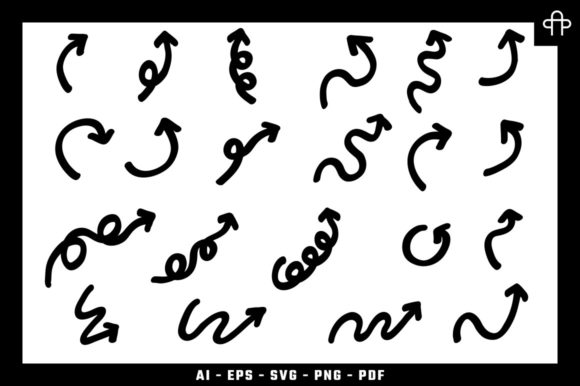
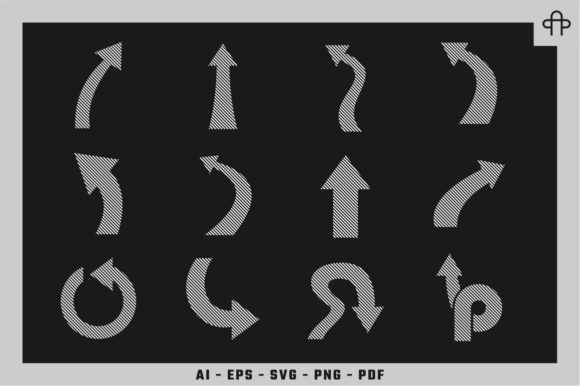
In the landscape of modern visual communication, clarity is often the most valuable currency. Whether you are designing a user interface, structuring a corporate presentation, or laying out an educational infographic, the ability to guide the viewer’s eye effectively determines the success of your message. This is where directional graphics play a pivotal role. Specifically, the Arrows Striped Vector Illustration set offers a distinct aesthetic that balances functional directionality with stylistic flair. Unlike standard solid arrows, striped variants introduce texture and visual interest without sacrificing readability, making them ideal for brands seeking a contemporary yet professional look.
For professionals ranging from freelance graphic designers to marketing managers in small businesses, understanding how to integrate these assets efficiently can significantly streamline production timelines. The key lies not just in having the files, but in knowing how they fit into the broader ecosystem of your design toolkit. With a comprehensive package including AI, EPS, PNG, SVG, and PDF formats, these illustrations are designed to be versatile components in a larger creative process.
The Strategic Role of Directional Graphics in Visual Planning
Before diving into the technical aspects of file management, it is essential to understand where directional elements fit within a project’s lifecycle. In the planning phase of any visual asset—be it a website landing page, a printed brochure, or a social media campaign—structure is paramount. You are essentially mapping out a journey for your audience. Arrows serve as the signposts along this journey.
Using a Arrows Striped Vector Illustration during the wireframing or mockup stage allows stakeholders to visualize flow without getting distracted by final color palettes or typography. The striped pattern provides enough visual weight to indicate importance and direction, yet remains neutral enough to be swapped or adjusted later. This makes them particularly useful in collaborative environments where feedback loops are frequent. By establishing the flow early with clear, high-quality vector assets, you reduce the need for major structural revisions during the final polish phase.
Navigating File Formats for Maximum Efficiency
One of the most common bottlenecks in creative workflows is format incompatibility. A robust asset pack mitigates this by providing multiple file types, each serving a specific purpose in the production chain. Understanding which format to use at each stage ensures consistency and quality control.
- AI and EPS Files: These are your primary source files for editing. If you are using Adobe Illustrator or similar vector-based software, these formats allow you to manipulate the anchor points, adjust the stripe width, or change colors to match brand guidelines precisely. They are essential during the creation and customization phase.
- SVG Files: For web developers and UI designers, SVGs are indispensable. They scale infinitely without losing quality and have small file sizes, which is crucial for website performance. Integrating Arrows Striped Vector Illustration SVGs directly into code ensures crisp rendering on all devices, from mobile phones to 4K monitors.
- PNG Files: When working in raster-based programs like Photoshop or when quick drag-and-drop functionality is needed in presentation software like PowerPoint or Keynote, PNGs with transparent backgrounds are the go-to choice. They are ready-to-use and require no additional processing.
- PDF Files: Ideal for print-ready documents or sharing proofs with clients who may not have design software. PDFs preserve the vector quality, ensuring that printed materials such as brochures or annual reports maintain sharp edges and clean lines.
By organizing these files into a structured folder system before starting a project, you eliminate the time spent searching for the right asset version. This preparation step is often overlooked but yields significant efficiency gains over the course of a year.
Implementation Across Different Media Channels
The versatility of striped arrows allows them to transcend single-use cases. Their application varies depending on the medium, but the core principle remains: guiding attention. Here is how these assets interact with different platforms and methods.
Digital Marketing and Web Design
In digital marketing, conversion rates often hinge on clear calls to action (CTAs). A solid arrow might feel aggressive, but a striped arrow offers a subtle nudge. When placed next to a signup form or a "Learn More" button, the Arrows Striped Vector Illustration draws the eye through pattern recognition. The stripes create a sense of movement, subtly implying progress or forward momentum. For web designers, using the SVG format ensures that this visual cue remains sharp regardless of screen resolution, contributing to a polished user experience.
Corporate Presentations and Reports
Business leaders and consultants frequently rely on slide decks to communicate complex strategies. In this context, clarity is king. Using vector arrows to illustrate growth trajectories, process flows, or hierarchical structures helps audiences digest information quickly. The striped design adds a layer of sophistication, preventing the slides from looking generic. Since these files are available in PDF and PNG, they can be easily inserted into PowerPoint or Google Slides without pixelation, maintaining a high standard of professional presentation.
Educational Content and Infographics
Educators and content creators use infographics to break down dense information. Arrows are critical in showing cause-and-effect relationships or sequential steps. The visual texture of striped arrows can help differentiate between different types of flows—for example, using solid arrows for primary steps and striped arrows for secondary or optional paths. This visual distinction aids cognitive processing, helping learners follow the logic more intuitively.
Ensuring Brand Consistency and Quality Control
Introducing new assets into a brand’s visual library requires careful consideration of consistency. The Arrows Striped Vector Illustration set is designed to be adaptable, but it must align with existing brand elements. Before widespread implementation, conduct a quick audit of your current materials.
Check the stroke weights and corner radii of your existing icons. If your brand uses rounded edges, ensure the arrows are adjusted accordingly in the AI or EPS files. If your brand palette is monochromatic, test the arrows in grayscale to ensure the striped pattern remains visible and effective without color differentiation. This step ensures that the new assets feel like a natural extension of your brand rather than an disjointed addition.
Furthermore, consider the long-term usability of these assets. Vector files are future-proof; they can be scaled up for a billboard or down for a favicon without quality loss. By investing in high-quality vector illustrations now, you avoid the need to recreate or upscale low-resolution images later, saving both time and resources in the long run.
Practical Tips for Seamless Integration
To get the most out of this 12-item set, consider adopting a few best practices in your daily workflow:
- Create a Master Library: Import the AI or EPS files into your design software’s symbol or component library. This allows you to drag and drop arrows into any project while maintaining a link to the original asset. If you need to update the style globally, you can edit the master symbol.
- Standardize Naming Conventions: Rename files to reflect their orientation and style (e.g., Arrow_Striped_Right_Blue.ai). This simple organizational habit reduces search time significantly when working under tight deadlines.
- Test for Accessibility: Ensure that the contrast between the stripes and the background is sufficient for users with visual impairments. If the stripes are too fine or the contrast too low, the arrow may lose its effectiveness as a directional cue.
- Combine with Other Elements: Arrows rarely work in isolation. Pair them with concise text labels or icons to reinforce the message. The striped texture should complement, not compete with, other visual elements on the page.
Ultimately, the value of the Arrows Striped Vector Illustration lies in its ability to enhance communication through thoughtful design. By understanding the technical specifications, planning their strategic placement, and integrating them consistently across platforms, professionals can elevate the quality of their visual outputs. Whether you are streamlining a business workflow, enhancing a marketing campaign, or creating educational materials, these tools provide the structural support needed to guide your audience effectively. The focus should always remain on the user’s experience, ensuring that every visual element serves a clear, purposeful function in the broader narrative.