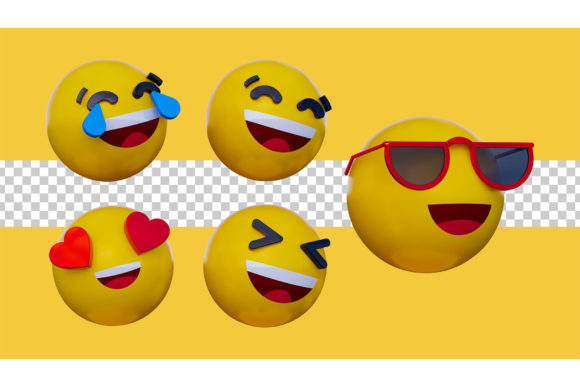
Enhancing Digital Communication with a Set of Popular Emoticon 3d Assets
In the rapidly evolving landscape of digital communication, visual elements have transcended their role as mere decorations to become essential components of user engagement and brand identity. Whether you are a graphic designer working on a social media campaign, a developer building an interactive messaging app, or a marketer aiming to humanize a corporate brand, the need for high-quality, versatile visual assets is constant. This is where a Set of Popular Emoticon 3d becomes an invaluable resource. These assets are not just static images; they are dynamic tools that bridge the gap between text-based communication and emotional expression, offering a modern, tactile feel that flat icons simply cannot achieve.
The shift towards three-dimensional design in user interfaces and marketing materials reflects a broader trend in digital aesthetics. Users are drawn to depth, shadow, and realism, which create a sense of presence and interactivity. A well-curated set of 3D emoticons allows creators to tap into this psychological preference, making their content more engaging and memorable. However, acquiring these assets is only the first step. The true value lies in how easily they can be integrated into existing workflows, edited to match specific brand guidelines, and deployed across various platforms. This is why the technical specifications of such a set—specifically the inclusion of PSD files, PNG files, and smart objects—are just as critical as the visual design itself.
Understanding the Value of High-Quality 3D Emoticons
At its core, a Set of Popular Emoticon 3d is a collection of digitally rendered facial expressions and symbols that convey emotion in a three-dimensional space. Unlike traditional 2D emojis, which are often flat and uniform, 3D emoticons possess volume, lighting, and texture. This added dimensionality allows them to stand out in crowded feeds, capture attention more effectively, and convey nuance in tone. For businesses and creators, this means higher click-through rates, increased time spent on page, and a stronger emotional connection with the audience.
The challenge many professionals face is finding assets that are both visually appealing and technically flexible. Many free resources offer low-resolution images or rigid formats that are difficult to customize. This limitation forces designers to spend hours recreating assets from scratch or settling for subpar visuals that dilute their brand’s professionalism. A premium set of 3D emoticons addresses this pain point by providing a balance of aesthetic quality and functional versatility. By offering files in multiple formats, including layered PSDs and transparent PNGs, these sets empower users to tailor the assets to their specific needs without requiring advanced 3D modeling skills.
Practical Applications Across Industries
The utility of a Set of Popular Emoticon 3d extends far beyond casual messaging. In the realm of digital marketing, these assets can be used to create eye-catching social media posts, email headers, and ad creatives. For instance, a brand launching a new product might use a 3D "excited" or "surprised" emoticon to generate buzz and curiosity. The depth and realism of the image make it more likely to stop users from scrolling past, thereby increasing visibility and engagement.
In web and app development, 3D emoticons can enhance user experience by providing visual feedback. Imagine a fitness app that displays a 3D "celebratory" emoticon when a user completes a workout, or a banking app that uses a 3D "secure" lock icon with a friendly face to reassure customers. These small details contribute to a more intuitive and enjoyable user interface, fostering loyalty and satisfaction. Furthermore, in educational technology, 3D emoticons can make learning materials more approachable and less intimidating, particularly for younger audiences or those learning complex subjects.
Content creators and influencers also benefit significantly from these assets. By incorporating unique 3D emoticons into their videos, thumbnails, and stories, they can establish a distinct visual style that sets them apart from competitors. This consistency helps in building a recognizable personal brand, which is crucial for long-term success in the creator economy. The ability to edit these emoticons ensures that they align perfectly with the creator’s color palette and overall aesthetic, maintaining a cohesive look across all channels.
The Importance of Editable Formats: PSD, PNG, and Smart Objects
One of the most significant advantages of a professional Set of Popular Emoticon 3d is the inclusion of editable file formats. Specifically, the provision of PSD (Photoshop Document) files with smart objects is a game-changer for designers. Smart objects allow users to replace textures, colors, and even shapes within the 3D model without destroying the original layer structure. This non-destructive editing capability means that a single emoticon can be adapted to fit dozens of different campaigns or brand identities with minimal effort.
For example, if a company’s primary brand color is blue, but the default emoticon is yellow, a designer can simply double-click the smart object layer, change the color, and save. The update propagates instantly across the entire composition, preserving shadows, highlights, and reflections. This level of flexibility saves countless hours of manual adjustment and ensures that the final output remains high-quality and consistent. Additionally, the inclusion of PNG files with transparent backgrounds offers a quick-and-dirty solution for users who do not have access to Photoshop or need to insert the emoticons into presentations, documents, or basic web designs without any background interference.
The "easy to edit" nature of these files lowers the barrier to entry for non-designers as well. Small business owners, social media managers, and educators can customize the emoticons to suit their needs without needing to hire a professional graphic designer for every minor tweak. This democratization of design tools empowers a wider range of users to produce professional-grade visual content, enhancing the overall quality of digital communication across the board.
Tailoring the Approach to Different User Needs
Different users will approach a Set of Popular Emoticon 3d with varying goals and technical skills. Graphic designers may focus on the deep customization capabilities offered by the PSD files, experimenting with lighting, angles, and textures to create unique compositions. They might use the smart objects to integrate the emoticons into larger 3D scenes or combine them with other design elements for complex layouts.
On the other hand, marketers and content creators may prioritize speed and consistency. For them, the pre-rendered PNG files are often sufficient, allowing them to quickly drop the emoticons into Canva, PowerPoint, or social media scheduling tools. Their main concern is ensuring that the emoticons align with their brand voice and message, so they might focus on selecting the right expressions rather than altering the visual properties extensively.
Developers and UX designers might look at the set from a technical integration perspective. They may need to convert the PNGs into sprite sheets or optimize the PSD layers for use in prototyping tools like Figma or Sketch. For these users, the clarity of the file organization and the resolution of the assets are paramount. They need to ensure that the emoticons look crisp on high-density displays and load quickly within applications.
Recommendations for Effective Implementation
To get the most out of a Set of Popular Emoticon 3d, it is essential to consider context and consistency. When using these assets in a professional setting, ensure that the style of the emoticons matches the rest of your visual identity. If your brand uses minimalist, flat design, introducing highly realistic 3D emoticons might create a jarring contrast. Instead, look for sets that offer a stylized 3D look that complements your existing aesthetic.
Additionally, pay attention to the emotional tone of the emoticons you choose. While a "laughing" emoji is universally understood, the nuance of a 3D render can convey subtler emotions like sarcasm, empathy, or excitement. Use these nuances to enhance your message, not just decorate it. For instance, in customer service communications, a gentle, empathetic 3D face can soften the tone of a difficult message, helping to de-escalate tension and build rapport.
Finally, always respect licensing agreements. Ensure that the set you purchase or download allows for commercial use if you intend to use it in business-related projects. Investing in a high-quality, legally compliant set of assets protects your brand from potential legal issues and supports the creators who develop these valuable resources.
In conclusion, a Set of Popular Emoticon 3d is more than just a collection of images; it is a strategic tool for enhancing digital communication. By offering versatility, ease of use, and high visual impact, these assets enable professionals across various industries to create more engaging, expressive, and effective content. Whether you are designing a new app, launching a marketing campaign, or simply looking to add a touch of personality to your presentations, integrating 3D emoticons can elevate your work and connect with your audience on a deeper level.