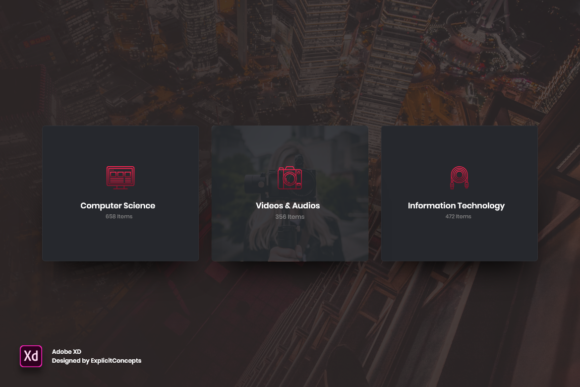
Streamlining Digital Design with Categories Items in Adobe XD
In the fast-paced world of digital product design, efficiency is not just a luxury; it is a necessity. Designers, marketers, and entrepreneurs are constantly seeking tools that reduce friction between ideation and execution. This is where Categories Items - Adobe XD emerges as a vital resource for modern creatives. Whether you are building a complex e-commerce platform, a sleek portfolio, or an educational app interface, the ability to manage content structures effectively can make or break the user experience. By leveraging pre-structured, well-organized design assets, professionals can bypass the tedious initial setup phases and focus on what truly matters: crafting intuitive and engaging user journeys.
The relevance of these resources extends beyond mere convenience. As digital ecosystems become more saturated, the expectation for polished, professional interfaces has skyrocketed. Users no longer tolerate clunky navigation or inconsistent visual hierarchies. Consequently, the demand for high-quality, ready-to-use design components has grown exponentially. Categories Items - Adobe XD addresses this need by providing a robust foundation that is both flexible and visually refined, allowing creators to maintain high standards without sacrificing speed.
The Evolution of Design Workflows and Component Libraries
To understand the value of organized design assets, one must look at how design workflows have evolved over the last decade. In the early days of web and app design, every button, icon, and layout element was often created from scratch for each new project. This approach was not only time-consuming but also led to inconsistencies across different screens and platforms. As projects grew in complexity, the need for systematic design languages became apparent.
Today, the industry standard revolves around component-based design and design systems. Tools like Adobe XD have embraced this shift by offering powerful features for creating and managing reusable components. However, even with these advanced tools, starting from a blank canvas can be daunting. This is where curated collections like Categories Items - Adobe XD play a crucial role. They serve as accelerators, providing designers with a head start that aligns with contemporary best practices.
The trend toward modular design reflects a broader shift in how businesses operate. Agile methodologies require rapid prototyping and iterative testing. Teams need to pivot quickly based on user feedback, which means design assets must be easily adaptable. A rigid, hard-coded design structure hinders this agility. In contrast, a fully editable, layer-organized file allows for swift modifications, enabling teams to test multiple variations of a category layout in minutes rather than hours.
Why Organization and Layer Management Matter
One of the standout features of high-quality Adobe XD templates is their internal structure. When we discuss well-organized all in layers with clear names, we are touching on a critical aspect of professional design hygiene. For anyone who has inherited a messy design file, the frustration is palpable. Layers named "Rectangle 43 copy 2" or groups buried deep within unnamed containers create significant bottlenecks in the editing process.
A professionally prepared Categories Items - Adobe XD file eliminates this chaos. Each element is logically grouped and labeled, making it easy to locate specific components. This level of organization is not just about aesthetics; it is about functionality. When layers are clearly named, collaborating with developers becomes seamless. Developers can inspect elements, extract assets, and understand the hierarchy without needing constant clarification from the designer. This clarity reduces errors during the handoff phase and ensures that the final product matches the design intent.
Moreover, clear layer management supports scalability. As your project grows, you may need to add new categories, subcategories, or filter options. In a disorganized file, adding these elements can disrupt existing layouts and break responsive constraints. In a well-structured file, new elements can be inserted effortlessly, maintaining alignment and spacing automatically. This predictability is essential for maintaining consistency across large-scale projects.
Flexibility and Ease of Use for Modern Creators
The modern creator is often a hybrid professional. A marketer might need to tweak a landing page; a small business owner might want to update their service offerings; a freelancer might need to customize a template for a client. For these users, technical barriers must be minimized. The promise of being fully editable and really easy to use is therefore not just a marketing claim but a functional requirement.
Categories Items - Adobe XD files are designed with this accessibility in mind. Users can easily edit texts, fonts, and colors to match their brand identity. Moving or removing elements does not require advanced knowledge of vector manipulation or complex constraint settings. The intuitive nature of Adobe XD, combined with a thoughtfully structured template, empowers users of all skill levels to make meaningful changes.
Consider the practical implications for a small business owner launching an online store. They may not have the budget to hire a dedicated UI designer for every minor update. With a ready-to-use Adobe XD file, they can swap out product images, adjust category names, and change color schemes to reflect seasonal promotions. This autonomy reduces dependency on external agencies and allows for real-time responsiveness to market trends.
Similarly, for educators and bloggers, these templates offer a way to present information clearly and attractively. Organizing course modules or blog topics into distinct categories helps users navigate content more effectively. By using a pre-designed structure, educators can focus on the quality of their content rather than the intricacies of layout design.
Technical Quality and Visual Fidelity
While ease of use is paramount, it cannot come at the expense of quality. The specification of high quality 72 dpi is standard for digital screens, ensuring that graphics appear sharp and clear on monitors, tablets, and smartphones. This resolution is optimized for web and app environments, balancing visual fidelity with file size performance.
When working with Categories Items - Adobe XD, users can trust that the visual elements are crisp and professional. Icons are vector-based where possible, ensuring they scale without pixelation. Images are optimized for quick loading times, which is a critical factor for user retention and SEO performance. A slow-loading interface can drive users away, regardless of how beautiful the design is. Therefore, the technical optimization of these assets contributes directly to the overall success of the digital product.
Furthermore, the format itself—Adobe XD—offers unique advantages. It supports interactive prototyping, allowing designers to link categories and simulate user flows. This capability is invaluable for testing navigation structures before development begins. By clicking through a prototype, stakeholders can identify potential usability issues early, saving time and resources in the long run.
Practical Applications Across Industries
The versatility of Categories Items - Adobe XD makes it relevant across a wide range of industries. Here are a few realistic examples of how these assets can be applied:
- E-Commerce: Online retailers can use category grids to showcase product lines. The ability to easily swap images and text allows for rapid updates during sales events or when introducing new collections.
- Media and Publishing: News outlets and blogs can organize articles by topic, author, or date. A clean, categorized layout helps readers find relevant content quickly, increasing engagement and time on site.
- Education: E-learning platforms can structure courses into modules and lessons. Clear categorization helps students track their progress and navigate complex curricula with ease.
- Corporate Portfolios: Agencies and freelancers can display their work by service type or industry. A well-organized portfolio demonstrates professionalism and makes it easier for potential clients to find relevant case studies.
In each of these scenarios, the underlying benefit is the same: reduced friction. By removing the technical hurdles associated with setting up category structures, creators can focus on strategy, content, and user experience.
Adapting to Changing User Expectations
User expectations are shifting toward personalized and intuitive experiences. People expect digital interfaces to anticipate their needs and guide them effortlessly to their goals. Categorization is a fundamental tool in achieving this. It reduces cognitive load by breaking down large amounts of information into manageable chunks.
However, effective categorization requires more than just logical grouping; it requires visual clarity. Users must be able to distinguish between different categories at a glance. This is where the design quality of Categories Items - Adobe XD comes into play. Thoughtful use of whitespace, typography, and color helps differentiate sections and guide the user’s eye.
As mobile usage continues to dominate, responsive design becomes non-negotiable. Templates that are built with responsiveness in mind ensure that categories look great on any device. Whether viewed on a large desktop monitor or a small smartphone screen, the layout adapts seamlessly, preserving usability and aesthetic appeal.
Making the Most of Your Design Assets
To maximize the value of Categories Items - Adobe XD, consider adopting a few best practices. First, take time to familiarize yourself with the layer structure. Understanding how the file is organized will make editing faster and more intuitive. Second, maintain consistency when making changes. If you change a font or color in one category, apply the same changes across all related elements to preserve visual harmony.
Third, leverage the prototyping features of Adobe XD. Test your category navigation with real users or stakeholders. Gather feedback on whether the labels are clear and the flow is logical. Iterative testing is key to refining the user experience.
Finally, keep your files updated. As your brand evolves, so should your design assets. Regularly review and refresh your categories to ensure they remain relevant and aligned with your current offerings. A static design can quickly become outdated, while a dynamic, well-maintained interface continues to engage users effectively.
In conclusion, Categories Items - Adobe XD represents more than just a collection of design elements. It is a strategic tool that empowers creators to build better digital experiences efficiently. By combining high-quality visuals with organized, editable structures, these assets support the diverse needs of modern professionals. Whether you are a seasoned designer or a novice entrepreneur, leveraging these resources can help you achieve professional results with greater ease and confidence.