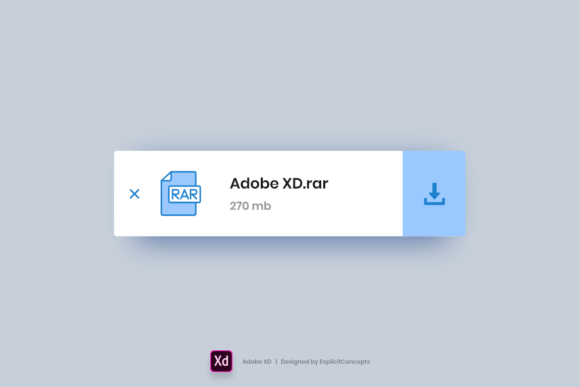
Streamlining Design Workflows with the Download Widget for Adobe XD
In the fast-paced world of user interface and user experience design, efficiency is not merely a preference; it is a necessity. Designers are constantly seeking tools that reduce repetitive tasks, maintain consistency, and allow for rapid iteration without sacrificing quality. One such tool that has gained significant traction among professionals is the Download Widget for Adobe XD. This resource serves as a foundational element for designers looking to prototype download functionalities, file transfer interfaces, or content acquisition flows within their digital products. By leveraging a pre-built, high-quality widget, creators can bypass the initial setup phase and focus on refining the user journey and visual aesthetics.
The value of this asset lies in its meticulous construction. Unlike generic templates that often require extensive cleanup, this widget is engineered with a professional workflow in mind. It is well organized all in layers with clear names, a feature that might seem minor but significantly impacts productivity. When a designer opens a complex file, the ability to instantly locate specific elements—such as buttons, progress bars, icons, or background shapes—saves valuable time. Clear naming conventions ensure that collaboration between team members is seamless, reducing the friction often associated with handoffs between design and development teams.
Core Characteristics and Technical Specifications
Understanding the technical backbone of any design asset is crucial for effective implementation. The Download Widget - Adobe XD is built to meet high industry standards, ensuring that it integrates smoothly into existing projects. One of the primary attributes is its resolution quality. The asset is delivered at a high quality 72 dpi, which is the standard resolution for web and screen-based designs. This ensures that all elements appear crisp and clear on various devices, from desktop monitors to mobile screens, without unnecessary file bloat that can slow down prototyping performance.
Furthermore, the widget is fully editable and really easy to use. This flexibility is paramount for designers who need to adapt components to match specific brand guidelines. Whether the project requires a minimalist aesthetic with subtle shadows or a bold, colorful interface with prominent calls to action, the underlying structure of the widget supports these changes effortlessly. The format is native to Adobe XD, meaning there are no compatibility issues or conversion errors that often plague workflows involving third-party plugins or imported files from other design software.
The concept of being ready to use implies more than just availability; it signifies a state of completeness. The widget comes with predefined states, such as idle, hovering, downloading, and completed. These states are essential for creating interactive prototypes that accurately mimic real-world application behavior. By having these states pre-configured, designers can quickly link them using Adobe XD’s auto-animate features, creating a realistic simulation of the download process without needing to build each frame from scratch.
Customization and Adaptability in Design Systems
A static design component is of limited use in a dynamic development environment. The true power of this widget emerges in its adaptability. Users find it easy to edit texts, fonts, colors, move or remove elements, allowing for deep customization. For instance, a fintech application might require a secure, trustworthy appearance with conservative color palettes and serif fonts, while a gaming platform might opt for vibrant neon colors and bold sans-serif typography. The widget’s layer structure allows for these drastic visual shifts without breaking the layout.
Consider the scenario of a global e-commerce platform. The download widget might need to support multiple languages, requiring text fields to expand or contract based on character count. Because the elements are logically grouped and named, adjusting the text box dimensions and repositioning adjacent icons becomes a straightforward task. Similarly, removing unnecessary elements, such as a secondary "Cancel" button for a mandatory download, can be done with a single click, ensuring the design remains uncluttered and focused.
This level of editability also supports the creation of comprehensive design systems. Teams can take the base widget and create multiple variants—small, medium, and large sizes; light and dark modes; or different icon styles. These variants can then be stored in a shared library, ensuring consistency across all pages of an application. The ease of modification encourages experimentation, allowing designers to A/B test different visual approaches to see which yields better user engagement metrics.
Practical Applications Across Industries
The versatility of the Download Widget - Adobe XD extends beyond simple file downloads. Its utility spans various industries and use cases, making it a valuable asset for a broad audience including professionals, educators, and business owners.
- E-Learning Platforms: Educators and course creators often provide downloadable resources such as PDF guides, worksheets, or video lectures. A clear, intuitive download interface enhances the student experience by making access to materials effortless. The widget can be customized to show progress bars for large video files, managing user expectations regarding wait times.
- Software as a Service (SaaS): SaaS companies frequently offer whitepapers, case studies, or trial software versions. The widget can be integrated into landing pages to capture leads before initiating the download. Its editable nature allows for the inclusion of form fields or consent checkboxes directly within the interaction flow.
- Creative Portfolios: Photographers, graphic designers, and artists often share high-resolution assets or press kits. A stylish download widget can reinforce the creator’s brand identity while providing a functional way for clients to access media. The high-quality 72 dpi output ensures that preview images look professional.
- Corporate Intranets: Internal business tools often require employees to download forms, policy documents, or training modules. A standardized, easy-to-use widget ensures that internal tools maintain a consistent look and feel, reducing the learning curve for new employees.
Enhancing User Experience Through Clarity
User experience (UX) is heavily influenced by clarity and feedback. When a user initiates a download, they need immediate confirmation that the action has started. The Download Widget - Adobe XD facilitates this by providing visual cues. The well-organized layers allow designers to easily tweak animation timings and transition effects. For example, a subtle pulse animation on the download button can indicate activity, while a progressing fill bar provides tangible feedback on completion status.
Moreover, the ability to move or remove elements enables designers to prioritize information based on context. In a mobile-first design, screen real estate is premium. Designers might choose to remove descriptive text and rely solely on universally recognized icons, knowing that the underlying structure supports such minimalism. Conversely, on a desktop dashboard, additional details such as file size, format, and estimated time remaining can be prominently displayed. This contextual adaptability ensures that the interface remains user-friendly across different devices.
Best Practices for Implementation
To maximize the benefits of this asset, designers should adhere to certain best practices. First, always review the layer hierarchy upon opening the file. Understanding the grouping logic will speed up the customization process. Second, leverage the clear names to create components within Adobe XD. Converting the widget into a reusable component ensures that any future updates to the master instance propagate to all instances, maintaining consistency throughout the project.
It is also advisable to test the widget in various lighting conditions. Since the colors and fonts are easy to edit, designers should create both light and dark mode versions to ensure accessibility and readability. Contrast ratios should be checked to meet WCAG guidelines, particularly for text elements indicating download status or instructions.
Finally, consider the emotional aspect of the download process. Waiting for a file can be frustrating. Using the widget’s editable elements to add friendly microcopy or engaging animations can alleviate user anxiety. A simple "Almost there..." message or a playful icon animation can transform a mundane wait time into a positive brand interaction.
Conclusion
The Download Widget - Adobe XD represents more than just a collection of vector shapes; it is a strategic tool for enhancing design efficiency and user satisfaction. Its well organized all in layers with clear names structure, combined with high quality 72 dpi resolution and fully editable components, makes it an indispensable resource for modern designers. By providing a ready to use foundation that is easy to edit texts, fonts, colors, move or remove elements, it empowers creators to focus on what truly matters: crafting exceptional user experiences. Whether for educational platforms, corporate tools, or creative portfolios, this widget offers the flexibility and professionalism needed to succeed in today’s digital landscape.