Mastering the Pricing Chart: A Strategic Guide to Clearer Communication and Better Conversions
In the competitive landscape of modern business, clarity is currency. Whether you are launching a new SaaS platform, offering consulting services, or selling physical products, the way you present your costs can make or break a sale. This is where a well-designed Pricing Chart becomes an indispensable tool. It is not merely a list of numbers; it is a psychological map that guides potential customers through their decision-making process, helping them understand value, compare options, and ultimately commit to a purchase with confidence.
Many businesses struggle with how to display their pricing structures effectively. The challenge often lies in balancing transparency with persuasion. You want to be open about costs, but you also need to highlight the unique value proposition of each tier. A cluttered or confusing layout can lead to decision paralysis, causing prospects to abandon their carts or look elsewhere for simpler answers. By implementing a strategic and visually appealing pricing table, you address these pain points directly, turning a potential friction point into a conversion engine.
The Psychology Behind Effective Price Presentation
Understanding the role of a Pricing Chart requires looking beyond the digits. Human beings are visual creatures who rely on heuristics—mental shortcuts—to make quick judgments. When a customer lands on your pricing page, they are not just looking for the cheapest option; they are looking for the best fit. A structured chart allows them to scan information rapidly, comparing features side-by-side without having to read dense paragraphs of text.
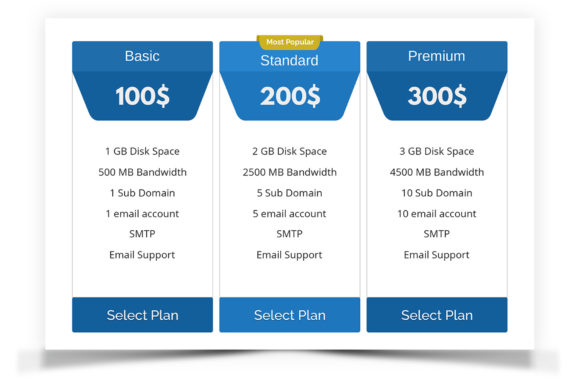
The primary goal of any pricing display is to reduce cognitive load. When information is organized logically, with clear headings, distinct columns, and highlighted recommendations, the brain processes it more efficiently. This is why premium-quality web pricing tables are so effective. They use visual hierarchy—such as bold fonts, contrasting colors, and strategic spacing—to draw attention to key details. For instance, highlighting a "Most Popular" plan with a different background color or a subtle shadow effect can subtly nudge users toward a specific choice, increasing the average order value without being pushy.
Design Flexibility and Brand Consistency
One of the most significant advantages of using a professional template for your pricing structure is the ability to maintain brand consistency while ensuring flexibility. A high-quality design asset, such as a fully editable PSD file, offers layers and styles that can be customized to match your corporate identity perfectly. This is crucial because trust is built on familiarity. If your pricing page looks disjointed from the rest of your website, it can create subconscious doubt in the user’s mind.
Consider the technical specifications that contribute to a polished final product. Designs created at high resolutions, such as 300 DPI, ensure that every element remains crisp and professional, whether viewed on a high-definition desktop monitor or printed in a brochure. The use of versatile fonts like Arimo, League Spartan, Open Sans, and Raleway provides a modern, clean aesthetic that enhances readability. These typefaces are chosen not just for their style, but for their legibility across various sizes and devices. When you have access to 100 layered files in RGB format, you gain the freedom to tweak every aspect of the design—from button shapes to background gradients—ensuring that the final output aligns perfectly with your marketing materials.
Practical Applications Across Mediums
While the digital realm is the most common place to deploy a Pricing Chart, its utility extends far beyond the website. In today’s omnichannel marketing environment, consistency across touchpoints is vital. A well-designed pricing table can be adapted for use in flyers, brochures, email newsletters, and even sales presentations. This versatility ensures that your message remains coherent whether a client is browsing your site on their phone or reviewing a printed proposal in a boardroom.
For example, a consulting firm might use a simplified version of their web pricing table in a PDF proposal sent to prospective clients. By keeping the layout consistent, they reinforce their professional image. Similarly, a startup showcasing its service tiers at a trade show can use a large-format print of the same design to attract attention and facilitate quick comparisons for passersby. The key is to have a master template that is easy to modify. With fully editable templates, you can quickly adjust dimensions, swap out icons, or update prices without needing to redesign the entire layout from scratch. This efficiency saves time and resources, allowing your team to focus on strategy rather than repetitive design tasks.
Tailoring the Approach to Different User Needs
Different businesses and audiences require different approaches to pricing presentation. A B2B enterprise software company, for instance, may need a complex chart that details extensive feature sets, integration capabilities, and support levels. In this case, the design must accommodate a large amount of data without becoming overwhelming. Using collapsible sections, tooltips, or clear categorization can help manage this complexity.
Conversely, a consumer-facing app might benefit from a minimalist approach. Here, the Pricing Chart should focus on simplicity and ease of understanding. Three clear tiers—often labeled as Basic, Pro, and Enterprise—allow users to make a quick decision based on their immediate needs. The visual design should be light, airy, and inviting, using ample white space to prevent clutter. Understanding your audience’s specific needs allows you to tailor the density and style of your pricing table accordingly. For tech-savvy users, detailed specifications might be appreciated. For general consumers, benefit-driven headlines and simple checkmarks are more effective.
Implementation and Customization Considerations
When implementing a new pricing design, it is essential to consider the technical workflow. Using professional software like Adobe Photoshop allows for precise control over every pixel. However, the true value lies in the editability of the file. A template that offers fully layered structures means that non-designers can still make minor adjustments, such as changing text or colors, with minimal training. This democratization of design assets empowers marketing teams to keep their pricing up-to-date in real-time, responding quickly to market changes or promotional campaigns.
It is also important to note that while templates provide a strong foundation, customization is key to standing out. Do not simply accept the default settings. Experiment with different shapes, layer styles, and color palettes to see what resonates best with your brand voice. Test variations to see which layout drives higher engagement. Remember, the photos or images used in preview modes are often for display purposes only and may not be included in the final file, so always plan to incorporate your own high-quality visuals or icons that reflect your actual product or service.
Maximizing Value Through Support and Community
Finally, the relationship with your design resource provider matters. Choosing a template from a creator who offers robust support ensures that you are not left stranded if you encounter technical issues. Knowing that you can reach out for help regarding file compatibility or special customization requirements provides peace of mind. This level of care reflects a commitment to client success, which is mirrored in the quality of the design itself. Furthermore, engaging with the community by rating items and providing feedback helps improve the ecosystem for all users, fostering a culture of shared improvement and excellence.
In conclusion, a Pricing Chart is more than a functional element; it is a strategic asset that influences perception and drives revenue. By investing in a high-quality, flexible, and professionally designed template, you equip your business with the tools needed to communicate value clearly and effectively. Whether for web, print, or presentation, a well-crafted pricing table simplifies the buyer’s journey, builds trust, and ultimately leads to better business outcomes. Take the time to refine this critical component of your marketing strategy, and watch as clarity converts into confidence and sales.