Understanding the Shield Check Mark Icon: A Visual Symbol of Trust and Security in Digital Design
In the modern digital landscape, trust is a currency as valuable as data itself. When users interact with websites, applications, or physical products, they look for immediate visual cues that signal safety, verification, and reliability. Among the most universally recognized symbols for this purpose is the shield check mark icon. This simple yet powerful graphic combines two distinct concepts: protection (the shield) and validation (the check mark). Together, they create an instant psychological reassurance that a system is secure, a transaction is safe, or a product is guaranteed.
For designers, developers, and business owners, understanding the nuance behind this icon is crucial. It is not merely a decorative element; it is a functional component of user experience (UX) design. Whether you are downloading a 3D render, editing a PSD file, or utilizing a smart object in your workflow, the way you implement this icon can significantly impact how your audience perceives your brand’s credibility.
The Psychology Behind the Symbol
To appreciate the effectiveness of the shield check mark, we must first look at its individual components. The shield has historical roots in defense and warfare, representing a barrier against harm. In contemporary design, it translates to cybersecurity, privacy protection, and antivirus software. The check mark, conversely, is a universal signifier of completion, correctness, and approval. When merged, these symbols communicate a complex message in milliseconds: "You are protected, and everything is correct."
This combination leverages what psychologists call "heuristic processing." Users do not have time to read lengthy privacy policies or technical security audits before clicking a button. Instead, they rely on mental shortcuts. Seeing a security guaranteed icon allows them to bypass detailed analysis and proceed with confidence. This is why you see these icons prominently displayed on checkout pages, login screens, and software download buttons.
Why Visual Consistency Matters
While the concept is simple, the execution varies widely. A poorly designed icon can look amateurish, inadvertently reducing trust rather than building it. This is where high-quality assets become essential. Designers often seek resources such as a set of shield check mark icon security graphics that offer versatility. Having access to multiple formats ensures that the icon looks crisp and professional across all devices and resolutions.
- PNG Files: Ideal for web use due to their transparency support, allowing the icon to sit seamlessly over any background color.
- PSD Files: Essential for designers who need to customize colors, shadows, or dimensions to match specific brand guidelines.
- 3D Renders: Increasingly popular for modern, tech-forward brands looking to add depth and realism to their interfaces.
Practical Applications in Modern Business
The utility of the shield check mark extends far beyond simple website decoration. It plays a pivotal role in various sectors, from e-commerce to healthcare technology. Let us explore how this icon functions in real-world scenarios.
- E-Commerce and Payment Gateways: When a customer enters credit card information, anxiety levels rise. Displaying a shield check mark icon near the "Pay Now" button serves as a visual reminder that the connection is encrypted and secure. Studies have shown that visible security badges can increase conversion rates by reducing cart abandonment.
- Software and App Development: During installation processes, users are often wary of granting permissions. An icon indicating that the app is verified and secure helps alleviate fears of malware or data theft. Using a smart object in design files allows developers to quickly update these icons as security certifications change or expire.
- Healthcare and Personal Data: In industries handling sensitive personal information, such as telemedicine platforms, trust is paramount. A prominent security icon assures patients that their medical records are protected under strict compliance standards like HIPAA.
The Role of 3D Renders and High-Quality Assets
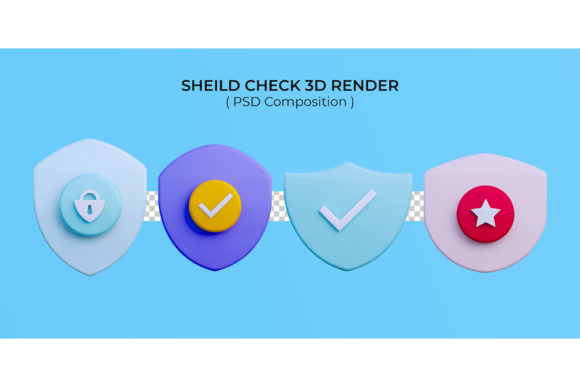
As screen resolutions improve and design trends evolve, flat design is increasingly giving way to more dimensional aesthetics. A 3D render of a shield check mark can provide a tactile, premium feel that flat vectors sometimes lack. These renders often include subtle lighting effects, shadows, and textures that make the icon pop off the screen.
For creative professionals, working with a PSD file that includes smart objects is a game-changer. Smart objects allow designers to non-destructively edit the icon. For instance, if a brand decides to change its primary color from blue to green, a designer can simply update the smart object layer, and the change will propagate through all instances of the icon in the design. This efficiency is vital for maintaining consistency across large projects.
Common Misunderstandings About Security Icons
Despite their popularity, there are misconceptions about what these icons actually guarantee. It is important to clarify that an icon alone does not provide security; it is a representation of security measures already in place. Placing a security guaranteed icon on a website that lacks SSL encryption or proper data handling practices is not only ineffective but potentially deceptive.
Furthermore, not all icons are created equal. Generic clip-art style shields may not convey the same level of professionalism as a custom-designed 3D render. Users are becoming more design-literate and can subconsciously distinguish between high-effort and low-effort visuals. Therefore, investing in a high-quality set of shield check mark icon assets is an investment in brand perception.
How to Choose the Right Asset for Your Project
When selecting design resources, consider the following factors to ensure you choose the best fit for your needs:
- Scalability: Ensure the asset is available in vector formats or high-resolution PNG files so it remains sharp on retina displays and large monitors.
- Editability: If you anticipate needing to tweak colors or shapes, prioritize PSD files with organized layers and smart objects. This saves time during the revision process.
- Style Consistency: The icon should match the overall aesthetic of your platform. A hyper-realistic 3D icon might look out of place in a minimalist, flat-design app. Conversely, a simple flat icon might look underwhelming in a high-end gaming interface.
- Licensing: Always verify the usage rights. Commercial projects require assets that are cleared for commercial use to avoid legal issues.
Integrating Security Symbols into User Experience
Effective design is about context. The placement of the shield check mark icon is just as important as its appearance. It should be positioned where users are most likely to experience doubt or hesitation. Common strategic locations include:
Next to form fields requesting sensitive data, such as social security numbers or passwords. At the footer of a webpage, alongside other trust badges like payment provider logos. Within onboarding tutorials for new software, to reassure users about privacy settings.
By integrating these icons thoughtfully, you create a seamless journey that guides users from uncertainty to confidence. The goal is to make security feel invisible yet omnipresent—a silent guardian that allows users to focus on their tasks without worry.
The Future of Trust Indicators
As technology advances, the way we visualize security will continue to evolve. We may see more dynamic icons that change state in real-time, indicating active monitoring or successful verification steps. Animation could play a larger role, with the check mark appearing only after a successful security scan. However, the core principle will remain unchanged: humans need visual reassurance.
Whether you are a seasoned designer working with complex smart objects in Photoshop or a business owner selecting pre-made PNG files for your landing page, the importance of the shield check mark cannot be overstated. It is a bridge between technical security and human emotion. By choosing high-quality, editable, and visually appropriate assets, you contribute to a safer, more trustworthy digital environment for everyone.
In conclusion, the shield check mark icon is more than just a graphic; it is a vital communication tool. Understanding its psychological impact, practical applications, and technical requirements allows creators to use it effectively. From the flexibility of a PSD file to the visual appeal of a 3D render, the right assets empower you to build trust effortlessly. As we navigate an increasingly digital world, these small symbols play a big role in shaping our online experiences.